Featured

The Paper Palace by Miranda Cowley

I could look at him and nothing else for eternity and be happy. I could listen to him, my eyes closed, feel his breath and his words wash over me, time and time and time again. It’s all I want.

A passionate encounter between two childhood friends. Elle Bishop remembers everything from the night that changed everything, up against the wall while her husband and mother chatted to the dinner guests inside.

This is a heart-achingly good read. A story that spans over 50 years but unfolds over a 24-hour period. There are many things unearthed – childhood trauma, family secrets and a love story that was doomed from the beginning. Read this. It’s a story that will stay with you for days afterwards.

The lyrical descriptions of nature that evoke this is sense of purity is definitely contrasted to the harsh and raw themes explored in the writing. We can’t ignore it. That brings me to my next point – it’s a difficult read. One that will have you crying, laughing and at times wanting to put the book down to fully process the narrative. But, my goodness, this is a gripping tale that will have you turning every page with anticipation and weariness. This is not for the fainthearted as there are themes of rape, incest and child abuse.

You could argue that Elle has been depicted as a character that is flawed from the beginning. From her birth she has encountered struggles and this most certainly doesn’t cease as she continues her journey into adulthood. You empathise with her from page one, and then your heart slowly breaks when you piece together her story that has led to the climatic point, which the story is based on.

Structurally, the novel consists of a series of flashbacks and each memory is pivotal to the story. The present day narrative is set over the course of 24 hours, each hour leads to an important decision that Elle needs to make. The flashbacks, consists of her grandparents stories, her mother’s and then what she remembers of her childhood.

The only frustration for me, and the last point I will make. The unclear ending was just irksome. I wanted a final decision from Elle, and you don’t get that. It left me with a mix of emotions that I had to process. One, sadness for her. Two, annoyed because I wanted to know what was going to happen, and so on. But, I guess that’s the point, the way it is left actually stirs up feelings in you and you have to accept the fact that there isn’t a complete resolution. The ending I would prefer, is one of happiness where Elle gets to be with her unrequited love – her soulmate. Thinking about this now, I guess life doesn’t work like that that. That’s what makes this story work so well, Miranda Cowley truly pins down realism to a tee.

Wish You Were Here – A raw insight into the pandemic

The tragedy, panic, rebellion, frustration and devastation caused by the global pandemic will always be etched into our hearts going forward. There will always be a remnant of Covid-19 – that’s in the way we interact, our behaviour and our habits. In ten years time, I still think that I will be scrubbing profusely and religiously pouring hand sanitiser on my hands like it was anointing oil.

What Jodi Picoult has done with her latest novel is completely remarkable. She gives readers a raw perspective into the pandemic from all angles. This is one story I resonated with whole heartedly and I am sure that every individual reading this will feel the same way.

The story revolves around our main protagonist, Diana – a well put together 29 year old, who has carefully penned out her entire life from what age she will be getting married at to the suburb where she wants to raise her kids, with her boyfriend and surgical resident Finn. Diana finds a blue Tiffany’s box before her and Finn’s well needed getaway to the Galapagos islands – finally, it seems like everything is falling into place. Diana works as an Associate Specialist for Sotheby’s and her first ever deal to procure a Henri de Toulouse- Lautrec goes awry when Kitomi Ito won’t sell. With her job in the balance, news of the virus starts to spread around New York City. When Finn no longer can go on holiday, Diana makes the bold move to go herself to the Galapagos islands. Thus, begins our tale.

I don’t want to spoil anything as this story is full of unexpected twists and turns – trust me! But what I do want to touch on a couple of themes that have been woven into the story.

Okay, let me first touch on the character of Kitomi -it has to be done. I can’t help but make the connection to John Legend’s wife Yoko Ono. Kitomi is selling a sought after and rare masterpiece by prominent post-impressionist artist Henri de Toulouse- Lautrec – the artist who was notoriously known for portraying Paris’ nightlife. Even though there isn’t a direct connection between the painting up for sale in Picoult’s story and Yoko Ino (as far as my Google search took me) there is still a couple of connections. One, the most obvious of them all is the relationship with spouses. Kitomi was married to one of the lead singers of iconic band ‘The Nightjars’ and unfortunately she was left widowed after her husband was brutally murdered. This is a very very obvious, I mean hit you in the face obvious connection with Yoko Ono. Not only that Yoko Ono herself is quite a major name in the world of art, not only is she a renowned activist but also a multimedia artist.

Jodi Picoult achieves a lot with this novel but one thing for me was how close to home it hit. I remember working, sitting at my desk staring at my screen and trying to focus despite the blaring and sobering news that was being broadcasted at the time. I remember spinning around and watching scenes unfold in Wuhan, China, where mothers were wailing unable to see their children at the hospital. I remember feeling empathetic but also bearing a twinge of ignorance – the sheer audacity to think that this could never happen to the UK. Fast forward three weeks from that bleak moment and it was a whole different story. Therefore, when Diana displays the similar sort of naivety when it comes to the virus, I surprisingly don’t find myself rolling my eyes – I instead, find myself captivated with the words on the page and nodding my head vigorously. Why? Because that was me. That’s why this novel works so well.

We can’t ignore the portrayal of frontline workers. Screw the Avengers, these are the actual superheroes. For example, we have Finn, Diana’s boyfriend working countless hours, so much so that the days are blurring into one. His mask cuts into his face, his skin has been scrubbed raw due to his routine once he finishes at the hospital, his paranoia is off the scale and even though he has seen so much death because of the virus he still turns up to work and works his ass off to try and gain a glimmer of hope.

If you do one thing this year, make sure you read this book.

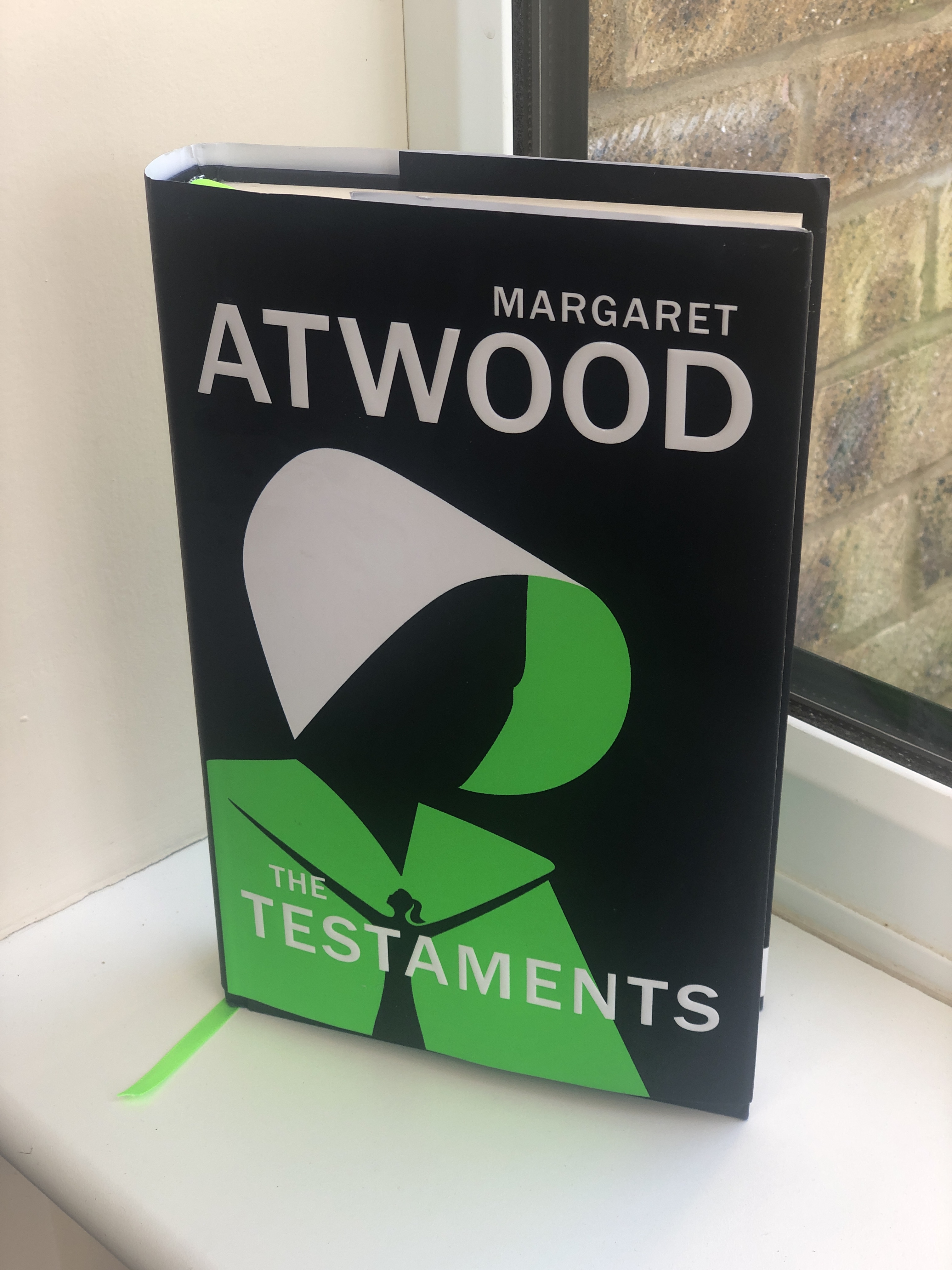
The Testaments.. Dare I say it’s better than the Handmaids Tale?

F6435E95-0DD8-4183-A7B8-CB91419F934EFirst thing first – I preferred ‘The Testaments’ to ‘The Handmaid’s Tale’. Yes I know, controversial view.  Plus, it’s not every day when someone prefers the sequel.

Honestly, the characters portrayed in ‘The Testaments’ were just remarkable. Each narrative showed strength in more ways than you can imagine all together causing the topple of Gilead.

It is clear that just like the first novel the reader has happened to find historical records of the Gilead society. The historical records include three narratives based around the lives of the Aunts who take residence in the untouchable Ardua Hall, (I mean not even The Eyes are allowed in here).  What I liked about the narratives is not only the fact that stories interlaced with each other to form one definitive ending but rather how each story had it’s own voice and point of view which was very stark and different to what I have normally read. I empathised with each one and I felt whatever emotion they were feeling during certain points of their experience.

The clock ticks, the minutes pass. I wait. I wait.

Fly well, my messengers, my silver doves, my destroying angels.

Land safely.

Ardua Hall – One of the three narratives

This is the narrative of the very famous Aunt Lydia who we have met in the first book. The word Ardua on the other hand, comes from the Latin Phrase per ardua ad astra, which means through adversity to the stars. I think this phrase sums up this narrative pretty well. Aunt Lydia was a lawyer pre Gilead and a successful one at that, one who gave no …. (I think you know what I was going to say there). When Gilead came into power that was stripped from her, she had to learn pretty quickly how to become submissive to a extreme patriarchal society and even though she is up in the ranks as we find,  she still has to come second to the male commanders. Her ideas are used as their own, and to them she is just a pawn who is easily replaceable. By the end Aunt Lydia has had enough and her plan which has been meticulously formed over a number of years can suddenly come into action thanks to the other two narratives.

Will I recommend this?

Frankly, Yes I would. I would give this book four stars if not five. I think everything was brilliant and the way the ending had been craftily curated was spellbinding. Your relationship with each character comes with it’s own complexities, there were times I wanted to shake someone’s shoulders, shouting ‘how can you not see you have been indoctrinated?!’ There were times I also empathised with each character and personally felt the hardships that they were faced with. What I also like is that each narrative was so different from the other and you found yourself waiting to read the next chapter of their own stories.

Follow me on Instagram for more Books!! @a_cuppa_and_a_book_


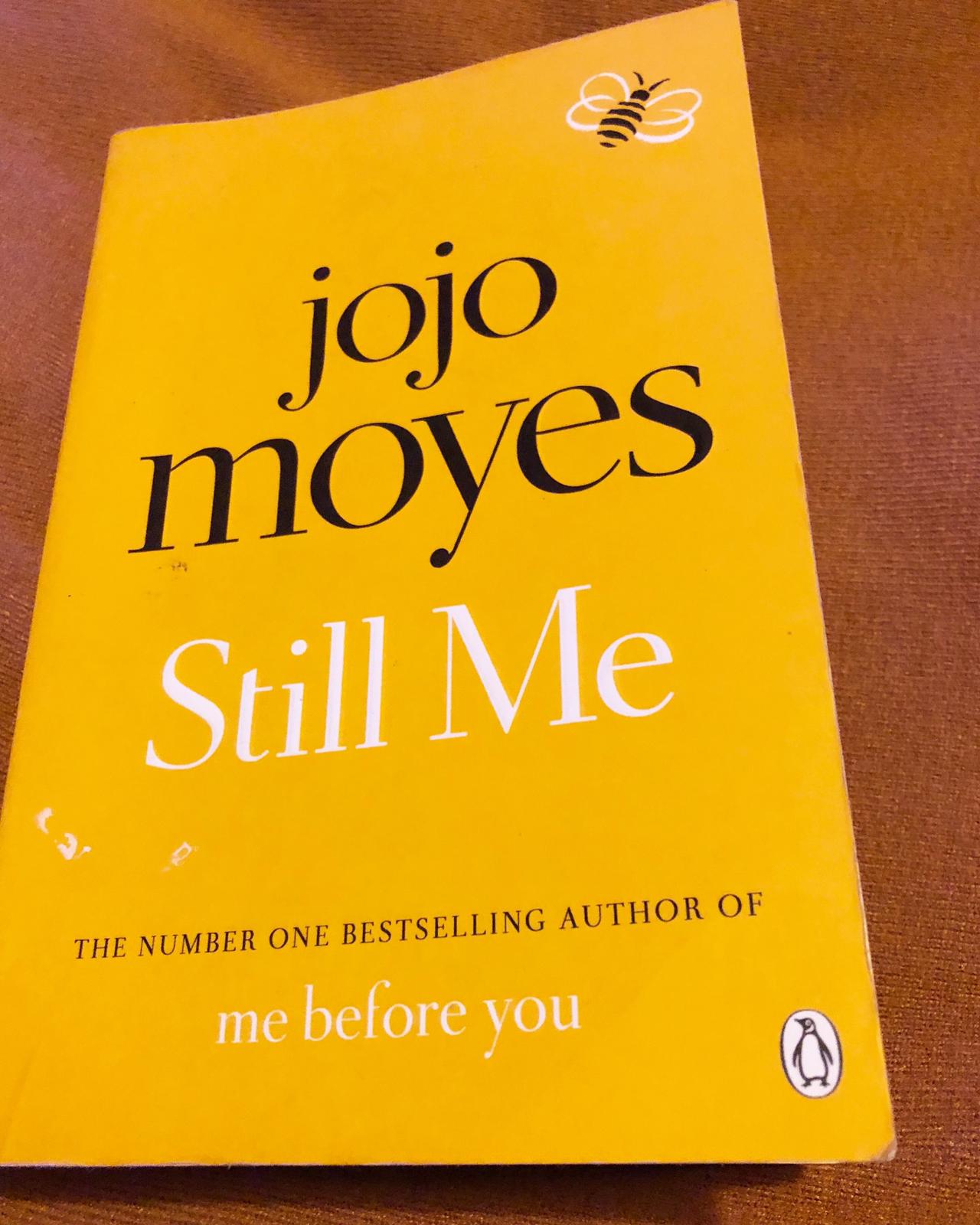
Still Me – Jojo Moyes – Review

Still Me Jojo Moyes


That’s it. As of today, I have become a fully-fledged Jojo Moyes fan.  I remember when I first read Me Before You, I was on a 12-hour flight and had read the whole book cover to cover.  By the time I had finished, there were tears literally streaming down my face, as you can imagine this caused a few weird glances in my direction.

I then raced through After You, and now here we are. I have finished the last of the trilogy by Moyes and Still Me it was just as addictive as its predecessors. Louisa Clarke’s manic life finds her in New York, having departed from Sam the hunk paramedic, she flies across the pond to look after the strange and dysfunctional Gopnik’s.

This story highlights the life of the rich and the elite in society, a world where money doesn’t mean a thing. Thousands of pounds can be spent on a dress for one evening without a batter of the eyelid. In this world, Louisa has to rise up at 5am to jog with her boss, attend socialite events, and most importantly bear in the mind the number one rule of – not knowing anything and not asking any questions no matter what you see, after all, you are the paid help.

There is soon trouble in paradise as Louisa soon starts to question the relationships around her. Her life that she was once so comfortable and familiar with starts crumbling around her but you wonder if the reason it does, is so Louisa can experience new things, discover a side to her she hasn’t known before and meet people that turn out to surprise her.

My favorite quote:

Who is Louisa Clarke, anyway?

I was a daughter, a sister, a kind of surrogate mother for a time. I was a woman who cared for others but who seemed to have little idea, even now, how to care for herself.

This book doesn’t only mark the end of Louisa’s adventures, it isn’t only about the realisation of true love and sappy romance, it’s about self-discovery. The Lousia you meet in book one is very different from the one we see standing at the top of the Empire State building on the very last page of the third book.


The History of Bees

For me bees are irritating, they evoke a sense of fear that has derived from memories of painful stings during my childhood. So when I see a bee profusely buzzing around near me – all logic flies out the window, I think they are out to get me and a weird dance erupts out of nowhere, consisting of me jumping around, waving my arms about.

I had no idea the impact they had on the environment and the detrimental factor that they had for the survival of human beings, until I read this book.

Maja Lunde masterfully weaves together biology, nature and human relationship to share with readers the importance of these small but majestic creatures, in her debut novel, The History of Bees.

Spanned through different time periods and told through three different perspectives, this dystopic novel shakes humans into realising the dangers of modern day farming.

At first, each character seems unrelated to each other, just appearing to be random people who relay their experiences with farming – one set in the past, one in the twenty-first century and a perspective from the future.

Climate change and the dangers of it has increasingly become a topical issue – maybe it’s due to the constant stream of documentaries educating us, or the media reporting on the never ending unearthing of ethical issues impacting the environment.

With this comes a recently new literary genre all wrapped with a big warning sign bow as it has a headstrong focus to caution the reader on the errors of our ways and the effects they have on the natural world around us.

Lunde’s debut novel for adults was my first experience of the ‘cli-fli’, or climate fiction genre.

Even though taking centre stage within the pages of the novel is the theme of modern day farming and the roles bees play, Lunde subtly also describes family relationships, loss, and education and intellect.

The theme that stuck out for me throughout the entirety of the book was the exposure of parent and child relationships.

The optimism and dreams the parent bestows on their child, interestingly enough always appears to be their dream they are trying to embed into their child in this narrative.

For example, the narrative of William set in England 1852 – he has a obsession with the study of bees. He has a goal of recreating the hive, based on extensive research that he has dedicated his time to. After battling what appears as depression he sets to work trying to restore his family name and regain the admiration of his son Edmund.

William has no time for his daughters, but one daughter in particularly persistently throws her knowledge and keenness to learn on her father. Charlotte soon becomes an  apprentice and a key figure in the story – one that was lurking in the shadows of William’s narrative.

On the other hand there is Edmund. The son who William has cast all his dreams and aspirations on. The family put every single penny they have to a side for William’s college tuition. Under William’s nose Edmund is constantly disappearing, always seeking his bed and has no interest in studying like his dad had once done.

Lunde keeps you hooked onto this storyline and it’s not till the very end that the narrative is laid out in front of you.

With one simple revelation everything fits together like a jigsaw, there is a click in your brain as you start to piece together three intertwining narratives that have one simple thing in common, the bee.

For your copy, purchase here

Rebel fiction is not a new phenomenon it’s been there throughout time

It frustrates me when someone opens a discussion about contemporary feminist literature and proceeds to tell me that it is about time rebel fiction came into being.

Rebel fiction- what I am specifically addressing is rebel women in fiction. Female protagonists who break away from the traditional patriarchal moulds that society has coerced on them.

I mean I don’t completely disregard this opinion, it is just that feminism has more recently been thrown under a spotlight, with female liberation and gender equality gaining more focus than ever before. It has always existed – maybe it is simply because no one paid that much attention to it before.

With movements like #TimesUp, #Metoo and even #EffYourBeautyStandards in the 21st century, females globally are marrying together through the use of social media in order to make a change.

A lot contemporary novels now also include the themes of feminism and their protagonists are heroines for rebelling against the oppressions against womankind. A good example of this would be The Power by Naomi Alderman –a hype in the literary sphere.
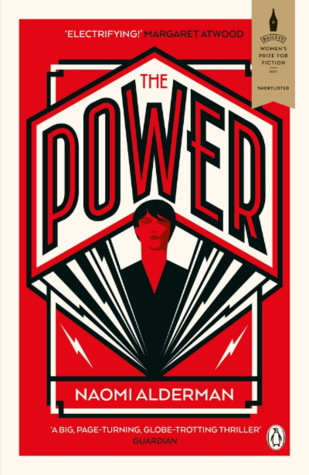
the power

I remember the commute to work on the tube and seeing most ladies delving into the pages of the novel. It seemed to me that the underground was just mirage of the iconic red front cover with a woman standing proud completely isolated.

The Power screams dystopia and toys around with the conformist ideas of power between sexes. Women take over the world in this novel, they are given a power that is so exhilarating and terrifying and one that makes men tremble.

Yet let’s not forget the literary greats throughout time that also should have had the same effect on society. However the comparison is that society simply rejected the rebellion, dare I say that they just were not ready for it.

Lady Chatterley’s Lover by D.H Lawrence, is almost comical for the mentions of sexual intercourse within its pages. It’s no Fifty Shades of Grey yet at the time of open publishing in the UK in 1960 it caused controversy amongst society.  Penguin books were taken to court for having the book published under the Obscene Publications Act 1959. The counsel’s opening address really rung through how pejorative British society was at the time. Mervyn Griffith-Jones opened by saying: “Would you approve of your young sons, young daughters – because girls can read as well as boys – reading this book? Is it a book you would have lying around your own house? Is it a book that you would even wish your wife or servants to read?”

Penguin went on to win the case and immediately sold millions of copies. However in the US, Canada, Australia, Japan and India the book was forbidden. Why did society have a huge disliking towards the book? Well apart from the illicit affair between an upper class woman and a working class man, it includes ‘explicit’ descriptions of sex and contained words that shouldn’t be published for the world to see.

Furthermore we all know words can influence. I can’t imagine the sheer horror for a patriarchal society to see an explicit novel encouraging a woman to explore the taboo word at the time – sex. Society was scared, they didn’t want their women to get carried away, to be encouraged in having affairs or even mixing with the wrong class. For that reason they had to hide this controversial novel and throw it on the fire along with other works that they condemned.

Society didn’t see an uprising surfacing from this trial – something that would be carried on throughout time and lead the way for rebel heroines. Phillip Larkin references the ban of Lady Chatterley’s Lover and marks the beginning of the revolt. The second wave of feminism would begin soon after this.

“Sexual intercourse began

In nineteen sixty-three

(which was rather late for me)

Between the end of the “Chatterley” ban”

Yet there has been more scandalous literature prior to this one. Going back all the way to the Seventeenth century, Aphra Behn steps out as a writer in the restoration era. Not only did she break barriers by becoming one of the first English women to earn money for writing. She also wrote numerous playwrights on the education of women, male impotence and she even acknowledged female sexual desire.

After she died her work was marginalised by society. He work was portrayed as lewd and in the 19th century women such as Matilda Betham (poet and letter writer) labelled Behn’s work as ludicrous and corrupt.

One of my favourite books is Tess of the d’Urbervilles by Thomas Hardy who also explored the barriers of female liberation through sexual discovery – the only difference is the protagonist is turned into an outcast, loses everything that she has and is exploited at the hands of the male species, all for losing her maidenhood. Even though the book is brilliant in depicting what it was like for women in the 19th century, it was also used as a lesson, a morale for women of the time to follow. It was an elaborate and wonderful disguise, the hidden meaning however was a warning to maidens of what would happen if they let their sexual desires get the better of them.

Rebels in fiction have always existed, they haven’t just surfaced in the twenty-first century. Regardless women that are depicted as rebels are done so to be a symbol – they are a symbol of a unity of women that won’t adhere to male constraints and conventions, be it in the 16th century or in the next twenty years. Rebel protagonist’s won’t simply disappear instead they will probably multitude, influencing readers, and challenging issues regarding sexism as they go along.